今から34 年前のこと、ある西洋のご夫婦が高野山を訪れ、奥の院にお参りをしたところ、目の前に、在り在りと弘法大師さまがお姿を現されました。お二人は自宅にも仏間を設けて日々礼拝を行うような信仰心の篤い夫婦でありました。お姿の出現に驚いて、深く心を打たれたご夫婦は、この体験を近くの僧侶に伝えたところ、自宅に仏間を設けて、日々に礼拝を行うほどの信仰心があり、お大師さまがお現れになるような霊験をいただいたのであれば、得度を受けてはどうでしょうと教示されました。その言葉に従い、ご夫婦は翌年にそろって得度を受けられました。そして次に、ご夫婦はお大師さまの修行(四度加行)がしたいと膝をついて懇願。だがしかしその願いを受け止めてくれるところは、遂にありませんでした。深く傷ついたお二人は、それでもお大師さまの導きを信じ、御影や仏像を自分の国へ持ち帰り、日々に在家勤行のお勤めを続けてこられました。それ以来、ご夫婦は毎年日本を訪れます。そして真言宗の寺院を幾度も巡礼するのですが、日本の僧侶から教えを得る機会は得られませんでした。
このお話をされる間、お二人は涙ながらに「どれほどの孤独と悲しみの中で、ただ仏さまと、お大師さまの教えに近づきたい一心で歩んできたか…」と語られ、またこの時の僧侶に対しても助けを求めて膝をついて懇願されました。ご夫婦は現代によく見られるような形ばかりのスピリチュアル志向ではありません。本当に、仏さまへの信仰と感謝を拠り所とし、深い孤独の中にあっても、静かに、静かにその道を歩まれてきたのだと感じられます。お二人のその純粋な信心に触れた僧侶も、とてもとても悲しい気持ちになりました。 このように、仏の教えを学び、信仰を深めたいと真摯に願いながらも、その道に近づくことすら困難で、長年にわたり苦しみ続けている方々が世界に存在しているのだという現実を知り、また僧侶は深く胸を締め付けられました。
またある時のこと。ある僧侶が英語で寺院を案内しますが、この外国人のご夫婦はずっと感情の変化もない。特にご主人は皮肉交じりの冗談を言うなど、あまり楽しんでおられないご様子でした。ところが、法話となった中盤、そのご主人が急に真言宗の思想、また即身成仏という教義の絶対性について具体的に、かつ詳細に質問を投げかけてこられました。この問いかけに僧侶は少し嬉しくなると共に、お寺の伝承やおかげ話だけでなく、この方には理論的なアプローチが必要だったのだろうと気付きました。 一通りの案内が終わり、奥様が靴を履き直している間に、ご主人がそっと「お話しをしたい」と申し出られました。その表情には、どこか苦しげな面持ちが浮かんでいます。彼は西洋人でした。僧侶を抱きしめるような身振りを見せたものの、「僧侶にそのような接触は失礼ではないか」と躊躇されたようでした。しかし、僧侶は「構いませんよ」と申し上げると、彼は堰を切ったように涙を流し始めました。
彼は軍人の家系に生まれ、若き日に戦争に従軍した経験を語り始めました。当時、彼とその部隊の仲間たちは、まるで競争やゲームのように、一日の終わりに「今日は何人撃ったか」を数え合っていたといいます。軍からは「女性や子供であってもテロリストである可能性がある」と教えられ、実際に子供が爆発物を車両に投げるよう訓練されていたこともあったそうです。そのため、「疑わしきは撃て、間違っていたら謝れ」と教えられていたと…。彼は、自分が何人の命を奪ったのか、今ではもう数えることすらできないと語りました。そして、西洋教の教えの中では、常に自分が「地獄に堕ちるに値する怪物」のように感じていたとも…。罪とは拭い去ることのできない「永続的な罰」であり、浄化の可能性がないとする考え方に、救いの光をずっと見いだすことができなかったのだそうです。ただ、今日説かれた仏教、そして密教の教えを聞いたとき、私は数十年ぶりに「人間としての感覚」を取り戻せたと、涙ながらに語られました。「こんな教えはこれまで聞いたことがなかった」と言い、僧侶に対して「どうか祈りを捧げてほしい」と深く頭を下げ、「ありがとう、人間に戻れた気がする」と感謝の言葉を述べられました。
実はこの話はわずか二日の間に起きた出来事でした。弘元寺は百年、人々の深い苦しみに向き合って来ました。またこの僧侶にとって、連日の出来事は「私たちが何を為すべきか」という仏さまからの明確なメッセージであると感じさせるに十分なものでした。
私たち僧侶はすべての存在・生命に対して常に慈悲を抱き、仏の深い覚りをこの身に体現しなければなりません。
お寺に参られる皆さまも魂・精神・慈悲の心を育み、真理に目覚めようとする菩薩さまです。
自分の内にある仏性に目覚め、自己を癒やし、輝きをいただき、また発揮して、周囲を大切にしていきましょう。
令和七年十二月二十一日
26日(金)「弁才天 護摩」20時
大晦日「水行 (一年の禊ぎ祓い) 」23時~
元旦「神祇法楽」0時
「初詣特別祈祷」9時半~15時(30分毎)
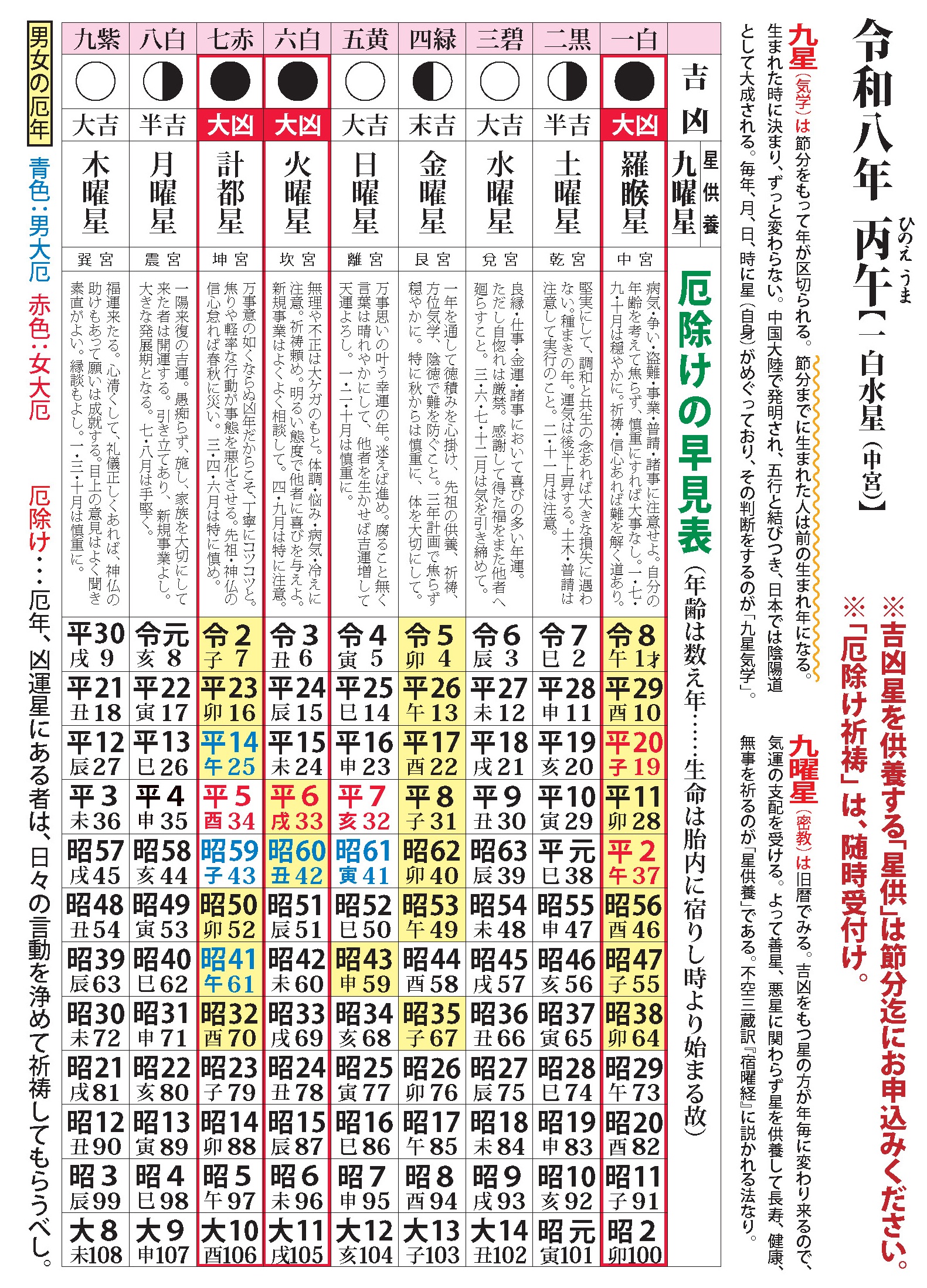
※「厄除け早見表」をご確認の上、個人の新年厄除け、特別祈祷はお寺迄申込ください。
4日(日)「箕島新八十八ヶ所」朝8時~
21日(水)「ご縁日の護摩」10時~ 20時~
2月3日「節分祭」20時 厄除の星供申込はお早めに!
The following is AI-translated.
Thirty-four years ago, a Western couple visited Mount Kōya. When they paid their respects at Okunoin, Kōbō Daishi appeared vividly before their eyes. The couple were people of deep faith who had even set aside a Buddhist altar in their home and offered daily prayers. Astonished and deeply moved by this apparition, they shared their experience with a nearby monk. The monk responded, “If you are devoted enough to maintain a Buddhist altar at home and pray every day, and have even received such a spiritual sign that Kōbō Daishi has appeared before you, perhaps you should consider receiving ordination.”
Following this advice, the couple received ordination together the following year. They then earnestly knelt and pleaded to undertake Kōbō Daishi’s training—the Shidō Kegyō. However, there was ultimately no place willing to accept their request. Deeply wounded, the couple nevertheless continued to trust in Kōbō Daishi’s guidance. They brought sacred images and Buddhist statues back to their own country and faithfully continued daily lay practice. Since then, they have visited Japan every year, making repeated pilgrimages to Shingon temples. Yet they were never given the opportunity to receive instruction from Japanese monks.
As they told this story, the couple spoke through tears: “How much loneliness and sorrow we have endured, walking this path with nothing but the wish to draw closer to the Buddha and to Kōbō Daishi’s teachings…” They again knelt before the monk, pleading for help. This couple was not merely following a superficial, fashionable form of spirituality so often seen today. Rather, they had truly relied on faith in the Buddha and gratitude, quietly and steadily walking their path even in profound solitude. The monk who encountered their pure devotion felt an overwhelming sadness. He was deeply struck by the reality that there are people throughout the world who sincerely wish to learn the Buddha’s teachings and deepen their faith, yet find it difficult even to approach that path, and who suffer for many years as a result.
At another time, a monk was giving a temple tour in English. Throughout the tour, the foreign couple showed little emotional reaction. The husband in particular made ironic jokes and appeared not to be enjoying himself. However, midway through the Dharma talk, he suddenly began asking specific and detailed questions about Shingon Buddhist philosophy and the absolute nature of the doctrine of sokushin jōbutsu—attaining Buddhahood in this very body. The monk felt a quiet joy, realizing that this man needed not temple legends or miracle stories, but a theoretical and doctrinal approach.
After the tour ended, while the wife was putting her shoes back on, the husband quietly said, “I would like to talk.” His expression carried a sense of deep anguish. He was a Westerner. He made a gesture as if to embrace the monk, then hesitated, perhaps thinking that such contact might be disrespectful. When the monk replied, “That’s all right,” the man suddenly burst into tears.
He began to speak of his background, having been born into a military family and having served in war when he was young. He said that he and his fellow soldiers would count how many people they had shot that day, almost as if it were a competition or a game. They were taught that even women and children could be terrorists, and in fact there were cases where children had been trained to throw explosives at vehicles. As a result, they were instructed, “If you suspect, shoot; if you were wrong, apologize later.” He said that he could no longer even count how many lives he had taken. Within the framework of Western religious teachings, he had always felt like a “monster deserving of hell.” Sin, as he had been taught, was an inescapable and eternal punishment, with no possibility of purification, and he had never been able to find any light of salvation in that worldview.
Yet upon hearing the Buddhist teachings—and especially the teachings of Esoteric Buddhism—shared that day, he said through tears, “For the first time in decades, I feel that I have regained my sense of being human.” Saying, “I have never heard teachings like this before,” he bowed deeply to the monk and asked, “Please pray for me.” He then expressed his gratitude, saying, “Thank you. I feel as though I have become human again.”
In fact, all of these events took place over the course of just two days. For a hundred years, Kōgentsu-ji has faced the deep suffering of people. For this monk as well, the experiences of those days were more than enough to feel like a clear message from the Buddha, asking, “What is it that we must do?”
As monks, we must always hold compassion for all beings and all life, and embody the profound awakening of the Buddha in our own lives. Those who visit the temple are also bodhisattvas—people who cultivate the soul, the spirit, and a heart of compassion, and who seek to awaken to truth. Let us awaken to the Buddha-nature within ourselves, heal ourselves, receive and manifest that inner radiance, and care for those around us.